Today in class we reviewed what we learned yesterday about the Panama Canal. Then we learned that Roosevelt added a new document to the Monroe Doctrine, called the Roosevelt Corollary. It stated that we had the right to be the police force in North and South America and we will pay off the debts of those places. If other countries didn't follow the rules, we had the right to attack them. By this time, it was 1904 and the U.S. had grown and become strong, therefore this document added the "muscle" to the Monroe Doctrine, and we were able to back it up.
We then moved on to imperialism in China. We reviewed the dynasties starting from the very first one (even though it was never proven to exist). It started off with the Xia, then the Shang dynasty, who were the first to monopolize bronze, then the Zhou dynasty, the first to enforce the mandate of heaven and the dynastic cycle. Next, there was the Qin dynasty, led by Shi Huangdi, and they were very strict legalists. The Han dynasty came next, and they can be compared to Rome. They were the classical and Golden Age of China, and silk and paper were invented during that dynasty. The Tang and Song dynasties were next, and they were also 2 Golden Ages. The Song dynasty was full of big cities and very cosmopolitan. The next dynasties were the Yuan, who were Mongols, and the Ming, who were very interested in starting, and ending exploration. That brought us to the last dynasty in China that was called the Qing, but they are also know as the Manchu. They existed from 1644-1911.
During the 1500's (Ming Dynasty), Europe started to push into China, mostly for their natural resources and convenient location. The Ming was unhappy with this, so they isolated their country and created strict laws that foreign countries had to follow in order to come in. They were able to do this because they were much stronger than any other place at the time. These policies carried over to the Qing dynasty.
In the beginning, the Qing was extremely stable, with fair laws, civil service exams, and great agriculture. They became obsessed with politics, and payed no attention to the economic and technnological problems they were facing. By 1715, China experienced a horrible famine and the government did little to help. We looked at woodblocks that showed the harsh conditions and the devastating effects of the famine. People had nothing, and China was faced with two main problems that the government needed to address:
1. unhappy people at home due to famine,
&
2. foreigners pushing into their country.
The "pushiest" country at this time was Great Britan. They didn't use guns, a navy, and they try to be nice, but when they don't get their way they change all of that. The laws that the Ming had set about who trade had gone down the drain because the Qin dynasty wasn't as strong as the Ming were, and the rest of the world became much stronger.
After that, we moved on to the sheets that we have to finish for homework, and textbook assignment number 5A is due tomorrow as well. We will also probably have a big test around March 8th.
The next person to blog is Tiffany!
Thursday, February 25, 2010

Wednesday, February 24, 2010
Coery said 2/24
Hello fellow classmates and Ms. Separ!
Today's date is Febuary 24th and I will share the information I recieved with the class.
Today's topic brought us back to 8th grade, where we learned about the United States and its interaction with the world.
In 1796 our first president (under the Consistution, before him were seven others) read aloud his farewell address in which he urged America to never get involved in foregin affairs. Pardon my French (Connally would call that racist), but that idea went down the shitter a couple of years later. :P Is that really French?
In 1823 James Monroe did the only one thing in his carrer - created the Monroe Doctrine. The document read, and I paraphrase, no other European country will meddle with the Americas or they will experience bodily harm; however, we will not bother the European countries. Basically, America told Europe to back off with a swithblade while Europe has a gun to America's head, but it wasn't all a stupid doctrine. At the time, Spain had it's eyes set on Latin America and America knew that the British and the Americas did not want Spain to take over Latin America, so America made themselves look tough by not mentioning that the British would help them. It sound like one of those dramatic scenes in an action movie that have people pointing guns at two different people at the same time. Bad example, but it works. :P
In 1845 now America plays the God card ("The power of Christ compels you") to explain why it wants to spread it's territories from coast to coast, because it was their "devine mission" to do so. The American people were so obbsesed with this idea that they called it the Manifest Destiny. So America simply said that God told them to murder some Natives and unreasonably slaughter thousands of bison. So we learned that in 1845, America had a streak of schizophrenia. :P
In 1846 there was a little war with Mexico and America. America won, and in return it got New Mexico and California. However, America tried not to act like a grime and gave Spain $15,000,000. US tried to act like a good country and not like a complete jerk like their pal Europe but it still failed. :P
In the 1890's America felt like taking over some of the islands in the pacific for the same reasons as Europe but capitalized the fact that they wanted to make money. One can relate this to the dutch colonies in the pacific back in the 1450's to 1750's period. Ha, I'm smart. :P
I think I forgot something interesting. Oh yeah, that stuff with Cuba and that stuff with pinapples in Hawaii. Give me a break. We'll start with Hawaii first. Why? Because I like Pinapples. :P
In the early 1800's there was some influence of Americas in the islands of Hawaii, except there were missonaries with nothing to do then to harrass the crap out of you about God, like Yankee fans with baseball. That all change due to one person called Mr. Dole. He went to Hawaii to grow pineapples. He made so much money, America told Dole to stage a coup in Hawaii. So Mr. Dole did, and he became President of Hawaii in 1894. Then he allowed America to annex him in 1898. Now you got to figure out what coup means, and I will give you one hint, and that it's not a 2-door car. :P
Oh, and America won Cuba after winning the Spanish-American war. Yeah it's tough to explain. :P
In 1904 we built the Panama Canal. we got the area around it by telling the native to revolt against Colombia and we backed Panama up. In 1999, we gave Panama back to Colombia. Ironic. :P
Next to the keyboard will be Amanda. I totally forgot if she went allready, but if she did than the next person will be David Freese. :P
Quiz: Create a change over time chart that describes US imperialism. Hand in tomorrow in class. Separ
Today's date is Febuary 24th and I will share the information I recieved with the class.
Today's topic brought us back to 8th grade, where we learned about the United States and its interaction with the world.
In 1796 our first president (under the Consistution, before him were seven others) read aloud his farewell address in which he urged America to never get involved in foregin affairs. Pardon my French (Connally would call that racist), but that idea went down the shitter a couple of years later. :P Is that really French?
In 1823 James Monroe did the only one thing in his carrer - created the Monroe Doctrine. The document read, and I paraphrase, no other European country will meddle with the Americas or they will experience bodily harm; however, we will not bother the European countries. Basically, America told Europe to back off with a swithblade while Europe has a gun to America's head, but it wasn't all a stupid doctrine. At the time, Spain had it's eyes set on Latin America and America knew that the British and the Americas did not want Spain to take over Latin America, so America made themselves look tough by not mentioning that the British would help them. It sound like one of those dramatic scenes in an action movie that have people pointing guns at two different people at the same time. Bad example, but it works. :P
In 1845 now America plays the God card ("The power of Christ compels you") to explain why it wants to spread it's territories from coast to coast, because it was their "devine mission" to do so. The American people were so obbsesed with this idea that they called it the Manifest Destiny. So America simply said that God told them to murder some Natives and unreasonably slaughter thousands of bison. So we learned that in 1845, America had a streak of schizophrenia. :P
In 1846 there was a little war with Mexico and America. America won, and in return it got New Mexico and California. However, America tried not to act like a grime and gave Spain $15,000,000. US tried to act like a good country and not like a complete jerk like their pal Europe but it still failed. :P
In the 1890's America felt like taking over some of the islands in the pacific for the same reasons as Europe but capitalized the fact that they wanted to make money. One can relate this to the dutch colonies in the pacific back in the 1450's to 1750's period. Ha, I'm smart. :P
I think I forgot something interesting. Oh yeah, that stuff with Cuba and that stuff with pinapples in Hawaii. Give me a break. We'll start with Hawaii first. Why? Because I like Pinapples. :P
In the early 1800's there was some influence of Americas in the islands of Hawaii, except there were missonaries with nothing to do then to harrass the crap out of you about God, like Yankee fans with baseball. That all change due to one person called Mr. Dole. He went to Hawaii to grow pineapples. He made so much money, America told Dole to stage a coup in Hawaii. So Mr. Dole did, and he became President of Hawaii in 1894. Then he allowed America to annex him in 1898. Now you got to figure out what coup means, and I will give you one hint, and that it's not a 2-door car. :P
Oh, and America won Cuba after winning the Spanish-American war. Yeah it's tough to explain. :P
In 1904 we built the Panama Canal. we got the area around it by telling the native to revolt against Colombia and we backed Panama up. In 1999, we gave Panama back to Colombia. Ironic. :P
Next to the keyboard will be Amanda. I totally forgot if she went allready, but if she did than the next person will be David Freese. :P
Quiz: Create a change over time chart that describes US imperialism. Hand in tomorrow in class. Separ
Wednesday, February 10, 2010
Mitchell said 2/8...
Ok so to start off, NO SCHOOL TOMORROW!!!!!! We all needed this day even though we have off in two more days anyway. Ok so yesterday we began class with everyone receiving a sheet on a part of technology that helped to advance and maintain imperialism. After we received the packet Connelly was yelled at for talking and annoying the class as usual. Then we went over the motives for new imperialism. the new imperialism occurs over Africa, Asia, and India. The motives were for economic, social Darwanistic, political, social gains and for the gain of natural resources. We mainly spoke about why the European nations were going to Africa in search of new colonies. The west coast of Africa is was a place easily accessible for the traders and made trading to Americas easier then the Eastern coast. Dr. David Livingstone was the first to go beyond the coastal regions and venture into the heart of Africa. He went in and wasn't heard from for close to 15 years then miraculously found in a small village by H.M. Stanley. The successful voyage into the heartland led to almost all European countries scrambling to gain colonies in Africa. Otto von Bismarck decided since he wasn't benefiting from the colonization to hold a conference in Berlin later to be know as The Berlin Conference, which set up guidelines for colonizations in Africa.
The rules were
You must plant Your flag in name of the mother country.
You must have effective occupation in the area you are claiming.
You must set up borders.
The Berlin Conference led to the Scramble for Africa.
After this conference, all countries rush to gain the colonies by setting upon setting up the rules for colonization. Lastly there were 2 types of control set up; direct and indirect. Direct was when the European nation put a person from their country in charge while indirect was when Europeans controlled the government but a native was still technically holding office so that the people would believe them easier. Technology readings are due tomorrow. ESSAY WILL BE IN CLASS ON FRIDAY, NO MATTER WHAT HAPPENS WITH THE WEATHER!
That's basically all we did yesterday and so next to go will Corey.
The rules were
You must plant Your flag in name of the mother country.
You must have effective occupation in the area you are claiming.
You must set up borders.
The Berlin Conference led to the Scramble for Africa.
After this conference, all countries rush to gain the colonies by setting upon setting up the rules for colonization. Lastly there were 2 types of control set up; direct and indirect. Direct was when the European nation put a person from their country in charge while indirect was when Europeans controlled the government but a native was still technically holding office so that the people would believe them easier. Technology readings are due tomorrow. ESSAY WILL BE IN CLASS ON FRIDAY, NO MATTER WHAT HAPPENS WITH THE WEATHER!
That's basically all we did yesterday and so next to go will Corey.
Thursday, February 4, 2010
Rebecca says 2/4...
Today in class we answered questions based on documents dealing with the different viewpoints on Imperialism. We then had to formulate a thesis, group the documents, and state any additional documentation, as if we were to write an actual essay. Document 1, an excerpt from “Does Colonization Pay” describes a positive outlook on Imperialism, mentioning the benefits that the colonies received from those nations that controlled them. They were given food, manufactured products, and access to schools and newspapers. Overall the colonies benefitted from advantages that came along with being a civilized society; benefits that they were incapable of obtaining on their own. Document 2, a picture of a white man being pulled in a chariot by an Asian and African worker depicted how native people were being abused by those who conquered their land.. This poor treatment of natives showed a negative outlook on Imperialism. Document 3, expressing a positive view, identifies exporters, bankers, military leaders, and missionaries as empire builders. Exporters promoted colonial markets, while bankers gave loans which supported the construction of railways and steamship lines between colonies and those nations controlling them. Military leaders believed in extending the white man’s rule over inferior races, while missionaries traveled to different places attempting to unite people under one religion.. Document 4, and African proverb, displays the Africans’ feelings about the missionaries. It expresses negative thoughts of how the whites took their land in return for their religion, an exchange in which they felt cheated. Document 5, a poem from the perspective of an African, describes how the whites abused their power as they killed and overworked the natives. The author clearly brings out the negative effects of imperialism through first hand examples of how his family had suffered. Document 6, thoughts from the perspective of a West African nationalist, responded harshly to years of colonialism. He stated that it prevented Africans from conducting their own affairs, it merged their economy with that of the ruling country, and on the whole, their civilization was demeaned. The final document, a German cartoon entitled “This is How the English Colonize” also portrays a negative attitude towards imperialism. It shows how the labor performed by the natives of colonized lands only benefited the nation that conquered them. Their work was being generated into money that went directly to the missionaries and other people who supported the takeover of their land.
The back page, although filled out differently for each person, should overall be about the different view points on imperialism, as mentioned in the historical context and task. Remember that Assignment 4 is due tomorrow, as well as emailed definitions/identifications of Cavour, Mazzini, Garabaldi, and Bismarck. Next up to blog is Mitchell!
The back page, although filled out differently for each person, should overall be about the different view points on imperialism, as mentioned in the historical context and task. Remember that Assignment 4 is due tomorrow, as well as emailed definitions/identifications of Cavour, Mazzini, Garabaldi, and Bismarck. Next up to blog is Mitchell!
Separ 2/4...
If I am not in class tomorrow, please work on writing the DBQ, using the documents from class.
Wednesday, February 3, 2010
Amanda said 2/3...
Today in class we started off by getting a sheet and an atlas. I don’t really remember what was on it but I’ll try to sum it up. The sheet went through some changes after the Congress of Vienna. Power was returned to the kings that Napoleon had overthrown. Unification was probably the result of enlightenment ideas and the Congress of Vienna. The sheet also went through new places that formed as a result of unification. Some new places that appeared were Norway, Prussia and Italy. In 1861, Italy was unified, in 1867, Austria-Hungary broke into two regions, all under one ruler, and in 1871, Germany became unified. When we handed that in, we got another sheet.
We had to make a Venn diagram comparing the unification of Germany and Italy after reading the sheet. Before being unified, Italy, unlike Germany had shared language and culture. Growing nationalism was a main reason for unification in both places, and they both started off as fragmented states. In Italy, a group called Young Italy was formed to help achieve unification. The Red Shirts were a group of people that fought against anyone who was opposed to unification. Italians received help from France in their war against Austria and they finally became unified in 1861.
There were many differences with the unification in Germany, where Prussia was the most powerful state. There was not a group that helped, one man, Otto Von Bismarck, was a main contributor to their unification. Bismarck had a theory for unifying Germany that was known as “Blood and Iron.” The blood stood for the sacrifices that the Germans had to make for unification. The iron represented the need for industrialization. Germany became unified in 1871, and that led to industrialization, imperialism and later, WW1.
Great job, on a difficult topic. Please read my blog!!!!!! Separ
That's it for today, and the next person to blog will be Rebecca.
We had to make a Venn diagram comparing the unification of Germany and Italy after reading the sheet. Before being unified, Italy, unlike Germany had shared language and culture. Growing nationalism was a main reason for unification in both places, and they both started off as fragmented states. In Italy, a group called Young Italy was formed to help achieve unification. The Red Shirts were a group of people that fought against anyone who was opposed to unification. Italians received help from France in their war against Austria and they finally became unified in 1861.
There were many differences with the unification in Germany, where Prussia was the most powerful state. There was not a group that helped, one man, Otto Von Bismarck, was a main contributor to their unification. Bismarck had a theory for unifying Germany that was known as “Blood and Iron.” The blood stood for the sacrifices that the Germans had to make for unification. The iron represented the need for industrialization. Germany became unified in 1871, and that led to industrialization, imperialism and later, WW1.
Great job, on a difficult topic. Please read my blog!!!!!! Separ
That's it for today, and the next person to blog will be Rebecca.
Separ 2/3...
Hello Everyone. I went to the doctor today and although, I am getting better, he wants me to continue to take it easy. So I guess we will give it one more day and see how I feel. I am going CRAZY not being able to do much, luckily I have my 9H midterms to keep me busy.
So today you took a little break from imperialism and looked at Italian and German unification. What you need to understand about these events is that both Italy and Germany were a bunch of small, independent states, who will in the late 1800s, become unified under one leader. We will briefly go over this when I get back but for homework, which is due FRIDAY, February 5th via email....
USING VERY DETAILED INFORMATION DEFINE/IDENTIFY the following:
1. Cavour
2. Mazzini
3. Garabaldi
4. Bismarck
So today you took a little break from imperialism and looked at Italian and German unification. What you need to understand about these events is that both Italy and Germany were a bunch of small, independent states, who will in the late 1800s, become unified under one leader. We will briefly go over this when I get back but for homework, which is due FRIDAY, February 5th via email....
USING VERY DETAILED INFORMATION DEFINE/IDENTIFY the following:
1. Cavour
2. Mazzini
3. Garabaldi
4. Bismarck
Tuesday, February 2, 2010
Mary said 2/2...
Hi guys, so as usual today was another fun filled class. To start off class, Connelly walked in fashionably late, carrying his huge cello on his back and his backpack on his stomach. After a good laugh we started the worksheet that the sub gave us. It was two readings, one which was a poem that focused on white mans burden and the other focused on black mans burden. White mans burden was when then white people felt they were superior and had a responsibility to change the "non-civilized" nations. The poem was written by a British poet and it was a response to America taking over the Philippines after the Spanish-American war. The poem further explained white mans burden and how the white should go into other nations and civilize the people, since they are seen as naive, barbaric and child-like. White people believed they're culture should be imposed on the conquered people, and their goal was to take over politically and economically. They also wanted to be seen as friendly and trying to help, and they did not want to be seen as a threat. The whites did help the conquered countries to an extent, by giving them food and helping with their sicknesses, but in the end the conquered people did not want to be changed, they liked their culture and customs as they were. The whites attempt to change these countries did not succeed because the indigenous people did not want to adapt new customs, they just wanted to stay unchanged. This poem justified European imperialism because the Europeans believed they were helping and improving mankind.
The second reading was another view of imperialism written by Edward Morel, another British journalist in the Belgian Congo. Black mans burden was basically the black people of Africa having to survive what the white people put them through. Slavery, disease, intense work, and abuse towards the people of Africa has mad their life miserable. They are obviously against imperialism since it has caused them nothing but trouble. There is no escape for the Africans, and the consequences cause not only physical effects, but it is also killing the soul and breaking their spirits. Their land has been invaded, families destroyed, and then they are put into a harsh life of slavery. Disease and climate also has a negative effect on the African people. The Europeans brought in diseases such as measles, smallpox, and syphilis and the Africans had no cures for these sicknesses. Also, the climate was very hot and dry which also led to deaths. Between the hard, intense work, diseases, hunger, and the climate Africans suffered from imperialism.
That pretty much sums it up for today so the next person to blog is Amanda...Feel better Ms. Separ
The second reading was another view of imperialism written by Edward Morel, another British journalist in the Belgian Congo. Black mans burden was basically the black people of Africa having to survive what the white people put them through. Slavery, disease, intense work, and abuse towards the people of Africa has mad their life miserable. They are obviously against imperialism since it has caused them nothing but trouble. There is no escape for the Africans, and the consequences cause not only physical effects, but it is also killing the soul and breaking their spirits. Their land has been invaded, families destroyed, and then they are put into a harsh life of slavery. Disease and climate also has a negative effect on the African people. The Europeans brought in diseases such as measles, smallpox, and syphilis and the Africans had no cures for these sicknesses. Also, the climate was very hot and dry which also led to deaths. Between the hard, intense work, diseases, hunger, and the climate Africans suffered from imperialism.
That pretty much sums it up for today so the next person to blog is Amanda...Feel better Ms. Separ
Separ's post...2/2
Happy Groundhog's Day. Did he see his shadow? Thanks to all that wished me a speedy recovery. Ok, let's get down to business. I am still out sick and hopefully will be back by the end of the week, I go back to the doctor tomorrow. Anyway, I received most of your homeworks BUT there were some of you, SEVEN to be exact that did not do it. NOT GOOD PEOPLE!!!!
Please remember that the person who is posting does not have to post until 7pm, sometimes they post earlier. I will post right after they do.
Today you examined two very opposing viewpoints about imperialism. Your homework tonight is to create a conversation between the two authors that debate the need for imperialism. Who's burden is it anyway? Email me your conversation, it should be in dialogue form.
esepar@bellmore-merrick.k12.ny.us
Please remember that the person who is posting does not have to post until 7pm, sometimes they post earlier. I will post right after they do.
Today you examined two very opposing viewpoints about imperialism. Your homework tonight is to create a conversation between the two authors that debate the need for imperialism. Who's burden is it anyway? Email me your conversation, it should be in dialogue form.
esepar@bellmore-merrick.k12.ny.us
Monday, February 1, 2010
Alex H said..2/1/10
Hey guys, I'm blogging AGAIN. You are all going to be blogging again! This probably going to be short because we only had a worksheet to do so bear with me. Connelly lets just say revealed some "personal" info to the rest of the class. He made big scene that I don't think he will ever live down, but i wont get into much detail. All I'm going to say is "You missed a good one Mrs.Separ". I don't even want to know. Anyway Mrs.Separ was absent today so we were assigned a worksheet. It was on "Imperialism." Imperialism is the political, militaristic, or economic domination of one country over another. This particular worksheet focused primarily on England. The numbered examples exemplifed why countries imperialized. For example, number four's reason was to spread Christianity. I'll just say the reasons and not go into detail with the numbers and everything. Some of the reasons were eeconomic gain, a lot of agricultural gain, good natural resources in desired country/area and once again the spread of Christianity. We also had to say how the industrial revolution let to imperialism. I thought that the industrialized countries needed more natural resources and that the countries that were industrialized had more wealth which led to the desire for more power. This is what we did today.
Make sure you read both Alex's blog and my blog (separ) too!
The next person is going to be Mary.
Make sure you read both Alex's blog and my blog (separ) too!
The next person is going to be Mary.
February 1...Separ post
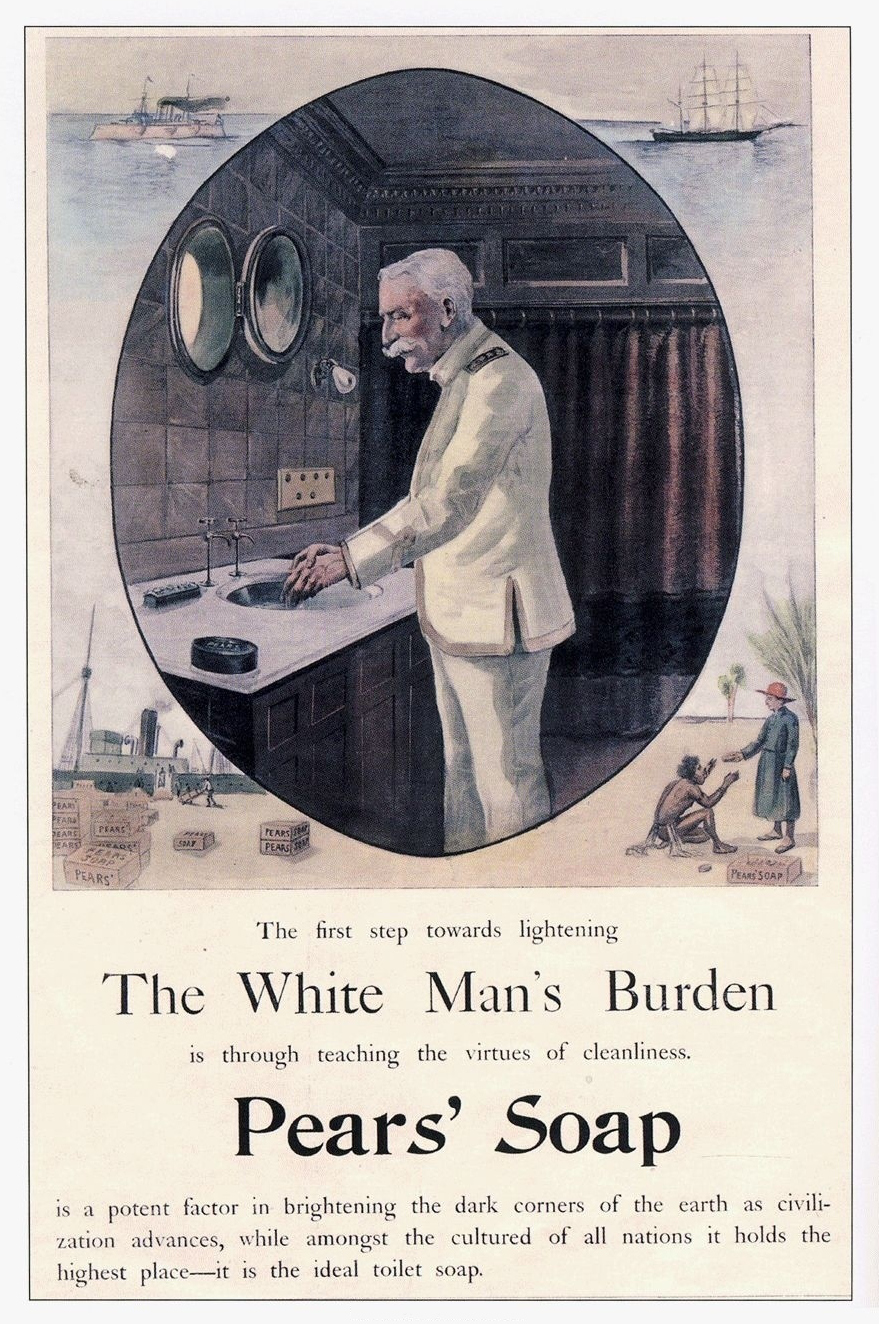
Hi everyone,
Assignment 4 is due on Friday, I did not realize I had not assigned it...thanks Eddie.
So I am home sick. I had a terrible stomach virus that has somehow settled into my upper respiratory system---AWESOME! Being pregnant there is not much medicine I can take, so only time and rest will help. But as sick as I am I am still obsessed with staying on track!
We have started one of my favorite topics---Imperialism! Today you read about the motives and I SURE HOPE you were more specific than just stating economic, political,and social. You should have come up with things such as need for natural resources, new markets, spreading Christian idea, etc.
Take a look at the Pear Soap advertisement, this was an actual advertisement made in 1899. Answer the following questions and email me the answers TONIGHT by midnight my email is esepar@bellmore-merrick.k12.ny.us Make sure you also read Alex's blog. His listed above mine under archive. Click it. Also, can someone text or call Alex to remind him to read my post...thanks.
How does this advertisement support the idea of imperialism? Read the writing and look at the corners for clues. Be Specific! This homework is worth 15 points, start off 3rd quarter on the right foot!
Subscribe to:
Comments (Atom)